
Grafting and Other Horticultural Magic
Did you know there is a loquat variety called Khaled #1 that produces quarter pound loquats as large as a woman's palm? You won't find Khaled loquat trees at nurseries for many years, but you can graft a friend's scions onto your tree today.
Although we are blessed with excellent nurseries in our area, the best cultivars are only available as scions (small branches from mature trees) from hobbyists and horticulturists. You grow your own seedling (or buy an inexpensive plant from a nursery), then graft, or surgically attach, a desirable scion on top. Scions can be sourced at the winter CRFG scion swaps, but you can find a wide variety on The Tropical Fruit Forum (AKA TFF, useful for annonas, mulberries, loquats, mangos, avocados, etc.), FigBid (de facto hub for fig cuttings), and the UCR Citrus Clonal Protection Program (the only legal way to get citrus scions in CA as of 2026). Note that some members of TFF will only sell to those who have had accounts for longer than a year, so it's helpful to start an account ASAP and post to establish credibility. Some chapter members are prolific TFF contributors. Learn to graft and air layer at one of our workshops; check the calendar for the next one.
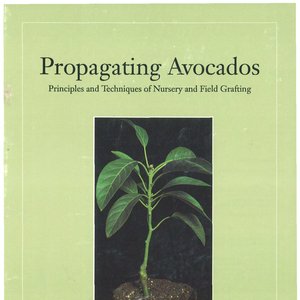
You can also learn to graft online: there is no shortage of YouTube tutorials on grafting. Here is an excellent written resource: this avocado-focused grafting manual discusses grafting techniques and tips that apply to other species too. Pair the manual with this illustrated glossary of grafting or the full glossary, which contains more than just grafting and budding terms. This CRFG propagation presentation is another great place to start.
Those resources cover a lot of grafting techniques. Grafting newbies—even many experts—achieve the highest success rates with basic cleft grafts. Use them when scion and rootstock diameters match or nearly match. If not, bark grafting is appropriate. Shield or chip budding is useful when scions have challenging cross-sectional shapes, as is often the case with citrus.
Timing grafts is critically important. Midwinter just before budbreak is a safe assumption for many species but not all; for example, cherimoya should be grafted in March, since it pushes new growth in April, and mango should be grafted in the heat of summer when it is pushing new growth. Scion freshness requirements vary by species. Mangos are ideally grafted on scion harvest day. Small avocado scions refrigerated in plastic with a damp—not wet!—paper towel will last one month, but 1" diameter avocado scions will last one year.
Everyone has preferred grafting tools, but all agree that a razor-sharp knife is essential. Whether you have a $100 grafting knife or an exacto blade, it must be sharp or you risk crushing the cambium cells that subdivide to fuse scion and rootstock. Grafting tape quality is important too: use buddy tape ($$$—available at AM Leonard) or parafilm ($—available on Amazon). Other materials work but these are the most foolproof.
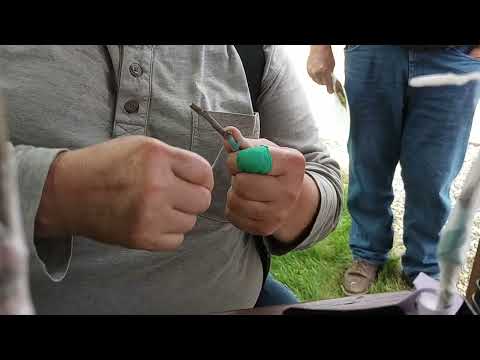
Use something to apply pressure to ensure cambium contact as the graft union heals. Some people use grafting rubber strips, which are the blue rubber bands you see on professionally grafted fruit trees; they are available at AM Leonard in enormous quantities, so ask chapter members if they have some to spare. See this video for a usage demo. These are appropriate for small-diameter grafts; use opaque vinyl garden tape or electrical tape for larger diameters and bark grafts. Remove the rubber or garden tape after the union heals (usually within 3 to 6 weeks) to prevent girdling.
Finally, protect your grafts from sun and rain. If water reaches the graft union, it will rot. If the grafts bake in the sun, they will desiccate or rot. Covering the entire scion with heavy-duty aluminum foil reflects heat and provides a waterproof barrier. Label your grafts.
Make sure your new growth has access to light; trim other branches if necessary. Remove new growth from below the graft to direct sap to the grafted branch. Carefully remove grafting tape to avoid damaging new growth—if the union actually healed it will be strong enough to withstand some light tugging. Some grafts will need to be staked and managed as they grow. Monitor the graft closely for a couple of years before allowing it to set fruit.
Layering and rooting are tools that can be used when a species is hard to graft (thin cambium), when it has a short grafting window, or when compatible rootstocks are unavailable. Air layering is appropriate for many tropical species, like lychee and guava. Rooting is appropriate for many ficus species. See the CRFG propagation presentation for guidance, ask your friendly neighborhood AI, or search for relevant posts in the communities above.
Tree Buying Tips
Trees are expensive and demand significant time and energy. Time your purchase, comparison shop at different nurseries, and review some of the considerations below.
Best Times to Shop
- Winter (Dec-Mar): Best time to plant bare-root or deciduous trees.
- Spring (April-May): Best time to plant sub/tropicals. Winter is a stressful time for them.
- Summer (Jun-Aug): Still an OK time to plant many sub/tropicals provided you irrigate diligently. Young grafted avocado tree trunks should always be whitewashed to prevent sunburn. In the South Bay shade cloth is not necessary except during extreme heatwaves. Surround WP—the white stuff you see on avocado trees in nurseries—has a learning curve but is easy to apply compared to building a structure for shade.
- Fall (Sep-Nov): Good deals on remaining inventory, but be prepared to prune roots before planting or up-potting.
Considerations When Buying
- Will this variety fruit in our climate? Some nurseries sell trees that are known to perform poorly and/or never fruit in Southern California. For example, mangosteen cannot be grown in SoCal outside a greenhouse, but you can still buy it—caveat emptor. See this well-known "no grow" list; avoid ultra-tropical trees like durian and rambutan as well as temperate trees with high chill requirements. Learn about chill hours and select "low-chill" cultivars that require fewer than ~300 chill hours. If you choose something that needs, say, a thousand, it will never flower and the tree will eventually die of hormonal confusion. There is often an acceptable substitute for a species that cannot be grown in Southern California. For example, try Brewster lychee or longan instead of rambutan; cherimoya, atemoya, or cherilata instead of guanabana; or achacha or Luc's garcinia instead of mangosteen.
- Is the tree a seedling, grafted, air layered, or grown from a cutting? Seedlings of most species take many years to bear fruit. Some species grow true to type, meaning offspring are very similar to their parents (or even identical in the case of e.g., polyembryonic mangos), but many like avocados can be wildly different from their parents—usually not for the better. Grafted trees (usually) have seedling bottoms but tops that have been borrowed from mature, fruiting trees. These trees have been "tricked" into thinking they are already mature, so they bear fruit as soon as the first year after the graft. Some hard-to-graft species are air-layered, which has the same maturity-enhancing effect as grafting.
- How long has the tree been in its pot? Have you wondered how all the trees in hundreds of rows in commercial orchards look perfectly vigorous while a large fraction of backyard trees struggle to grow? The culprit is usually underground. Commercial nurseries deliver trees to farmers long before they are rootbound in their pots. They don't use any voodoo magic when they plant—they just get trees that have the appropriate level of root development for planting: if there's not enough development, the soil will crumble and roots will be damaged when the tree is removed from its pot. If there's too much development, roots must be pruned carefully before planting. If not, the tree will strangle itself in a few years through girdling roots. Beware underdevelopment of roots in plants grown as cuttings or from air layers. Beware overdevelopment in discounted end-of-season plants. You can ask how long something has been in its pot, but staff members won't know and some nursery owners are not forthright about their up-potting schedules. It's best to check the rootball discreetly. It takes practice to do so without harming the plant.
- What is the rootstock? Learn about the best rootstocks for your species and area before going to the nursery. Some perform significantly better in clay than in sand. Some perform better in soils known to harbor nematodes. Others do better in our climate. For example, manila and corriente are much more vigorous for local growers than turpentine, which is the standard mango rootstock in Florida.
- Is there a guarantee? Some nurseries, like Armstrong, have built-in plant survival "insurance." But of course, you pay for it through a high sticker price. Others, like Mimosa, do not guarantee their plants at all because they specialize in plants that are marginal in our climate.
- What is the quality of the potting soil? Where is the root flare? Nothing is more annoying than buying a $100 no-refunds tree and discovering it was potted with styrofoam instead of perlite. As you check, dig down around the trunk until you get to the root flare. Pots are often overfilled when they are up-potted at the nursery, which results in excessive planting depth and accelerated death at home.
- What is the quality of the tree itself? Caveat emptor! Look for girdling roots, large trunk wounds, wilting leaves (a sign of root rot), and sunburned bark (yellow or black bark on e.g., avocado trees will result in significantly reduced plant vigor). Remove any wrapping around the trunk to inspect it before you buy your tree. This guide is focused on shade trees but provides great advice for fruit tree buyers too.
Internet Communities
These are great places to meet local and far-flung growers, ask questions, learn from old threads, and buy/trade plants and scions.
- Tropical Fruit Forum (TFF). High-quality community, but a lot of amateur plant and scion sellers. Buy from active users with long-standing accounts. Conversely, a lot of sellers will not sell to you unless you have an account with some history and contributions! Some chapter members are frequent posters.
- Growing Fruit. Another high-quality community with a lot of crossover with TFF. See this cherimoya thread as an example.
- Various Facebook groups. Quality varies from group to group and ebbs and flows over time, but some communities are worth joining. For example, as of 2026, new avocado growers could learn a lot from Southern California Backyard Avocado Growers.
Tip: sometimes forum threads are hundreds or even thousands of posts long, like this incredibly useful one about growing mango in Southern California. If you don't have time to read a doorstopper of a thread like that, use the print feature to turn the entire thing into a PDF and feed it into an LLM like ChatGPT or Claude. Have it summarize the main points for you.
Horticultural and Gardening Databases
| Resource | Description |
|---|---|
| PFAF | Enormous repository of horticultural information on many rare and sub/tropical plants. |
| CRFG | Our parent organization's Fruit Facts are how many of us learned about CRFG. They contain detailed information on many sub/tropical and temperate fruit, especially those that can grow in SoCal. |
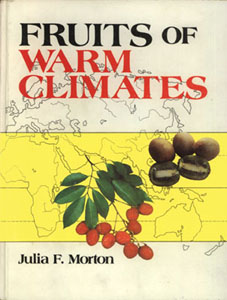
| FWC | Julia Morton's Fruits of Warm Climates contains horticultural information on many tropical fruit species. |
| AI | With the usual caveats, get info from ChatGPT, Claude, etc. Get better responses by prompting, "...check reputable horticultural databases like PFAF and forums like Growing Fruit before answering. Cite sources." |
Review of Basics
We all develop our own gardening habits, but these are great refreshers: tree buying guide and tree planting guide. The planting guide shows a berm in a figure but doesn't explicitly mention one; use a berm to direct water downward during the tree's first year in-ground. Stake thoughtfully: use soft materials like garden tape or old bicycle inner tubes, not wire. Drive stakes outside the planting hole. If rabbits or ground squirrels visit your property, use rabbit fencing and trunk protectors to make it harder for them to get to the bark.
Links


 Fruits of Warm Climates

 Avocado Grafting Manual (PDF)
 Grafting & Budding Glossary (PDF)
 CRFG Propagation Presentation (PDF)
 Grafting Rubber Strips Demo
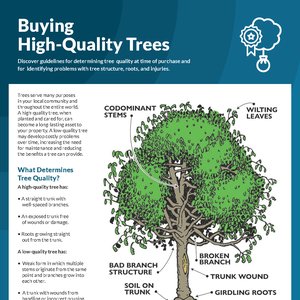 Shade & Fruit Tree Buying Guide (PDF)
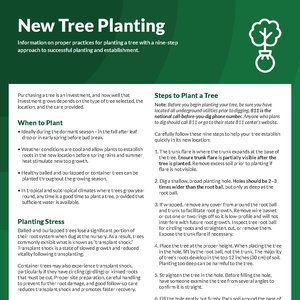 Tree Planting Guide (PDF)

